 Modular Conveyor Belts..webp)
Polypropylene (PP) Modular Conveyor Belts
Durable & Versatile Modular Belting for Industrial Conveying
%20Modular%20Conveyor%20Belts..webp&w=3840&q=75)
Polypropylene (PP) Modular Conveyor Belts
The Earth India Company offers Polypropylene (PP) Modular Conveyor Belts designed for reliable product handling in applications requiring a combination of chemical resistance, rigidity, durability and hygienic operation. PP modular belts are constructed from individual polypropylene modules connected by hinge rods to form a continuous conveying surface. The belt is positively driven by matching sprockets, providing controlled movement while reducing dependence on friction for power transmission. With different surface designs, pitches and accessories available, PP modular belts can be configured according to specific conveyor and product-handling requirements.
CORE COMPOUNDING
Polypropylene (PP) Thermoplastic Modules
Why Choose Polypropylene (PP)
Polypropylene provides a useful balance of mechanical and chemical properties, making it a versatile material for modular conveyor belt applications.
Core Product Features
Good Chemical Resistance
Suitable for environments involving exposure to many acids, alkalis and cleaning chemicals, subject to concentration and operating conditions.
Good Rigidity
Provides a stable conveying surface for controlled product handling.
Lightweight Construction
Helps reduce overall belt weight compared with many conventional conveying solutions.
Moisture Resistance
Well suited to wet and wash-down conveying environments.
Good Temperature Capability
Can be suitable for applications operating at higher temperatures than typical PE modular belt applications, depending on the specific material grade.
Positive Sprocket Drive
Provides controlled belt movement through direct engagement between the belt and sprockets.
Easy Maintenance
Individual modules can be replaced when required instead of necessarily replacing the complete belt.
Multiple Surface Configurations
Available in different modular designs according to product and process requirements.
Modular Belt Construction
PP modular belts consist of interconnected thermoplastic modules designed to form a flexible yet mechanically stable conveying surface.
Polypropylene Modules
Individual PP modules form the primary conveying surface and provide the belt's characteristic rigidity, chemical resistance and product support.
Hinge Rods
Hinge rods connect the individual modules and allow the belt to articulate around sprockets and conveyor transitions.
Drive Sprockets
Matching sprockets positively engage with the underside of the modular belt to provide controlled movement. Correct belt pitch and sprocket compatibility are important for reliable operation and service life.
PP vs PE vs POM Modular Belts
Selecting the appropriate thermoplastic material is important because each provides different operating characteristics.
PE – Polyethylene
Generally preferred when low-temperature flexibility and cold-environment performance are important.
PP – Polypropylene
Provides a useful balance of rigidity, chemical resistance, moisture resistance and temperature capability, making it a versatile choice for many processing and conveying applications.
POM – Polyoxymethylene / Acetal
Typically selected where higher strength, stiffness, dimensional stability and wear resistance are required.
The final material should be selected according to the actual temperature, load, chemical exposure and operating environment.
Positive Drive & Belt Tracking
A major characteristic of modular conveyor belts is their positive sprocket-driven operation. Instead of depending primarily on friction between a drive pulley and belt surface, the sprocket teeth engage with the modular belt structure.
Modular Maintenance: The modular construction provides an important maintenance advantage. If a particular area of the belt becomes damaged, the affected modules can often be removed and replaced individually, depending on the belt design. This can simplify maintenance compared with replacing an entire continuous belt.
This sprocket-driven mechanism helps provide:
Surface Designs
PP modular belts can be available with different surface configurations depending on the application. Common surface configurations include:
The availability of each surface depends on the selected modular belt series.
Typical Applications
PP modular conveyor belts can be suitable for:
For direct food-contact applications, the specific material grade and its applicable foodcontact compliance should be confirmed before selection.
Available Configurations & Accessories
Depending on the belt series and conveyor requirements, PP modular belts can be configured with:
These features allow the conveyor belt to be adapted to specific material-handling requirements.
Complete Belting Solutions from The Earth India Company
With years of industry experience, The Earth India Company provides application-focused modular conveyor belt solutions designed around specific product-handling and operating requirements. Our team considers the belt material, pitch, surface design, product characteristics, conveyor configuration and operating environment to help identify an appropriate modular belting solution.
Selecting the Right PP Modular Belt
Important parameters include:
For replacement requirements, providing photographs of the existing belt and sprockets along with dimensions can also help with identification.
Need a PP Modular Conveyor Belt?
Share your belt width, pitch, surface type, sprocket details, existing belt photographs, quantity and application requirements, and our team will assist you in identifying the suitable solution.
Industries & Applications
Food Processing
Proven Application Sector
Packaging Lines
Proven Application Sector
Washing Applications
Proven Application Sector
Product Transfer
Proven Application Sector
Sorting
Proven Application Sector
Cooling Lines
Proven Application Sector
General Material Handling
Proven Application Sector
Wet Processing
Proven Application Sector
Inclined Conveying
Proven Application Sector
Manufacturing & Processing Equipment
Proven Application Sector
Certifications & Compliance
Our manufacturing processes adhere to internationally recognized industrial product certificates.
ISO 9001:2015
Certified Quality Management System
DIN 22102
German Standard for Textile Conveyor Belts
REACH & RoHS
Hazardous Substance & Chemical Safety
BIS / IS 1891
Bureau of Indian Standards Industrial Specification
CE Certified
European Health & Environmental Safety Directive
Related Products
Complementary conveyor system designs and high-resistance belting accessories.
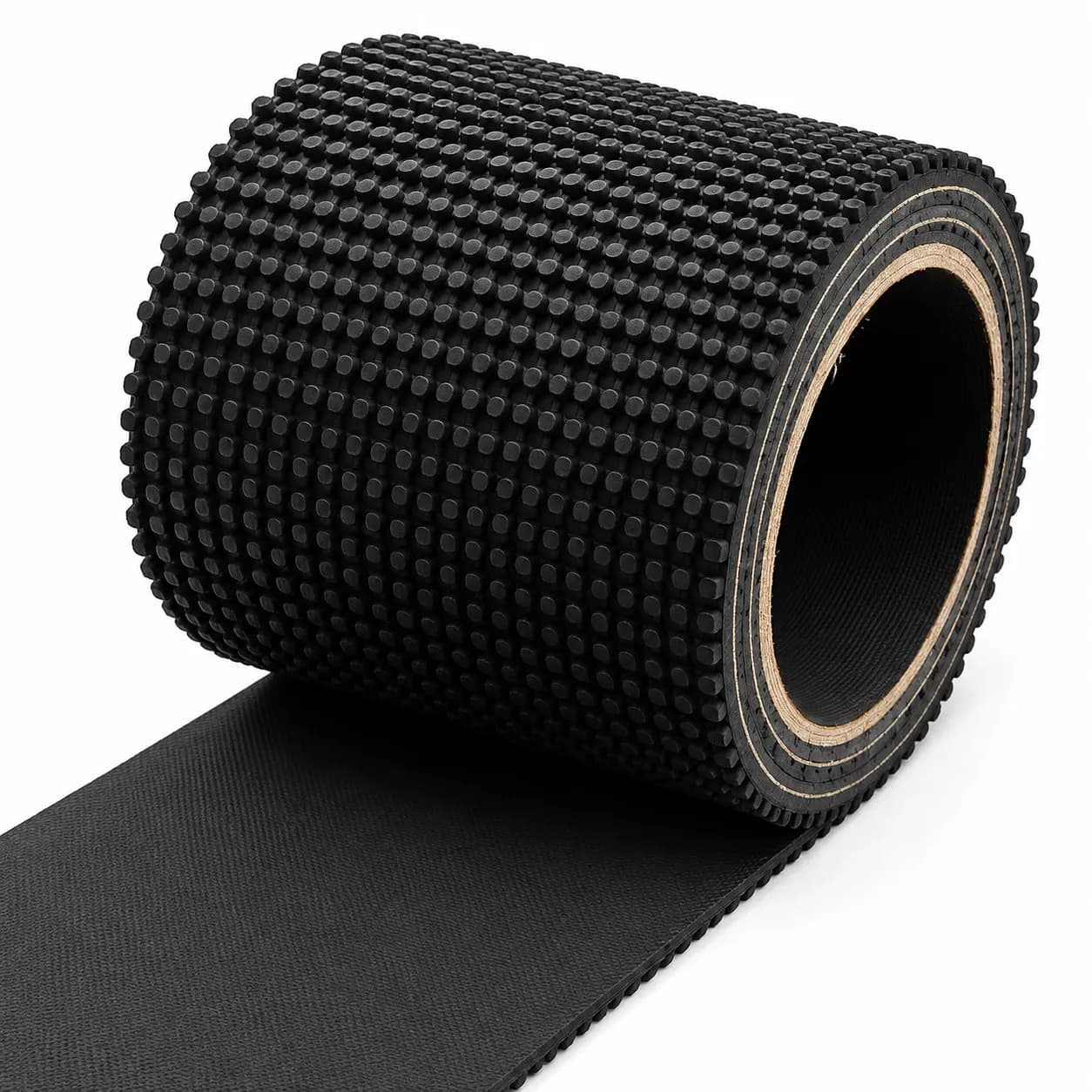
Rough Top Conveyor Belts
High-friction textured surface belt for handling slick packages and parcels.
%20Modular%20Conveyor%20Belts.webp&w=3840&q=75)
Polyethylene (PE) Modular Conveyor Belts
Lightweight, Hygienic & Reliable Modular Conveying Solutions
%20Modular%20Conveyor%20Belts.webp&w=3840&q=75)
Polyoxymethylene (POM) Modular Conveyor Belts
High-Strength, Low-Friction Modular Belting for Demanding Conveying Applications
Frequently Asked Questions
Technical answers regarding our polypropylene (pp) modular conveyor belts configurations.
Polyethylene (PE) is highly flexible with excellent impact strength down to -70°C, making it the choice for IQF freezing tunnels. Polypropylene (PP) has high chemical resistance to acids/bases and handles up to 105°C, suitable for hot washdowns. Polyacetal (POM) is the strongest polymer with low friction and high tensile capacity, ideal for long runs, heavy packaging, and accumulation lines.
Unlike friction-driven flat belts, modular plastic belts are positively driven by mating sprockets. The sprocket teeth lock into the hinge pocket of the modules. This mechanical engagement completely eliminates belt slip, even in wet, oily, or heavily loaded environments.
We utilize a secure snap-lock or plug-retention rod system. The rods are held in place by integrated snap clips at the side modules. This design allows quick, toolless pin replacement during maintenance while preventing pins from working loose during operation.
Yes, open-hinge designs expose the rod and hinge areas during rotation around sprockets. This allows water and cleaning agents to flush out food residues, preventing bacterial colonization and making them ideal for hygiene-sensitive poultry and seafood sorting lines.
Yes, that is one of the main benefits. If a section is damaged by a foreign object, you only need to push out the retention pins, replace the damaged modules or links, and re-insert the pins. The repair takes minutes, reducing maintenance costs.
Looking for the Right Industrial Solution?
Partner with The Earth India Company for durable, custom Conveyor Belts, Power Transmission Belts, and Conveyor Systems. Share your requirements, and we'll provide the best quotation.